
Letting every responder’s sensors report to every command team.
DHS’s Next Generation First Responder program used SensorUp to put fire, police and EMS sensors on one standards-based record that every command team shared.
Customer
- U.S. Department of Homeland Security (DHS), Science and Technology Directorate (S&T). Next Generation First Responder (NGFR) Apex program.
What was built
- An open, plug-and-play environment in which responder sensors register and share data across agencies as soon as they are deployed.
Data brought together
- Physiological monitoring from smart shirts and watches
- Vehicle position and orientation
- Mobile video and laser range finders
- Smart-city sensors and emergency response information systems
Earlier work · Public safety, federal · 2019 to 2020
Every agency’s sensors, one view of the incident
Most equipment a first responder carries cannot share data with the agency beside it, and a major incident puts fire, law enforcement and emergency medical teams on the same ground at once. DHS’s Next Generation First Responder program set out to build an open, standards-based environment where any sensor connects as soon as it is deployed, and SensorUp provided the link that brought that data together. Command teams across the responder domains shared one view of operations, in their own tools or in SensorUp Explorer, SensorUp’s no-code dashboard at the time.
This case study describes work completed in 2019 and 2020, before SensorUp’s current product, SensorUp Studio. It is a record of what the team delivered, not a description of what ships today.
How it went
An open standard gave first responder sensors interoperability on deployment
01 · The problem
Every agency’s equipment was its own stovepipe
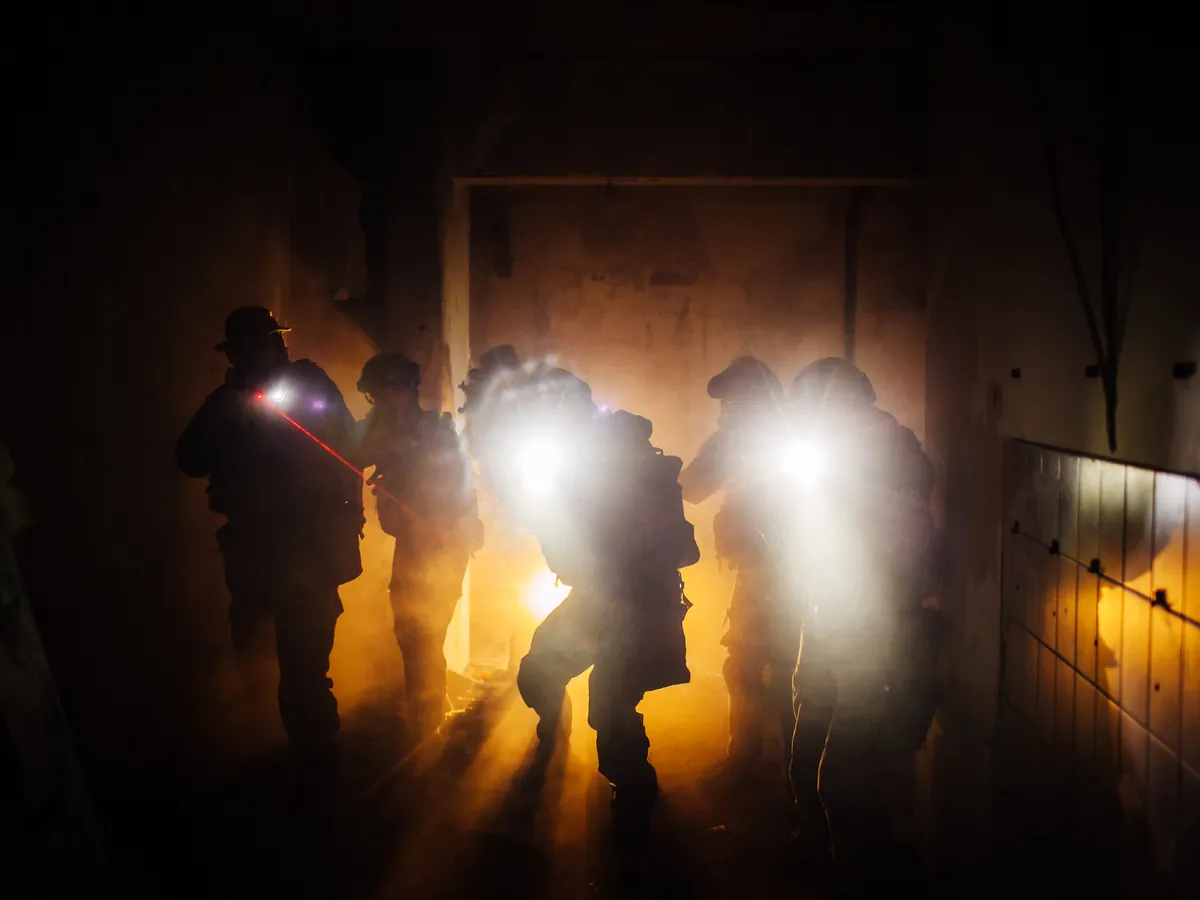
Sensor technology advanced faster than the equipment responders carried. Smart shirts, mobile video, drones and vehicle positioning all existed, and most of it arrived as a closed, proprietary system. One agency’s gear could not share data with another’s, and often could not connect to it at all. A major incident does not respect that. An earthquake, a flood or a terrorist threat puts fire, law enforcement and emergency medical teams on the same ground within minutes. Each command team saw its own responders and none of the others. The program’s stated requirement, the right information to the right person at the right time, stopped at the agency line.
Stock photograph
02 · Why SensorUp fit
An open standard instead of one more proprietary system
DHS could have specified a single vendor’s platform and asked every agency to buy into it. That is how the stovepipes were built in the first place. Or each agency could have written its own integrations, one per sensor, and rewritten them when the sensor changed. The program chose an open standard for sensor data, published by the Open Geospatial Consortium. Any sensor that spoke it was identifiable, accessible and usable by every team and every information management platform. SensorUp provided the implementation. It collected, cleaned and brought together the data from the responders’ sensors and platforms. Command teams worked from it in their own tools or in the Explorer no-code dashboard.
Route not taken
Single-vendor mandate
One platform, every agency buys in. That is how the stovepipes were built.
Route not taken
Per-agency integrations
One per sensor, written by each agency and rewritten when the sensor changed.
The fit
SensorUp, on an open standard
Any sensor that spoke it was usable by every team and every platform.
03 · Implementation and adoption
Sensors connected on deployment, and each agency kept its own tools
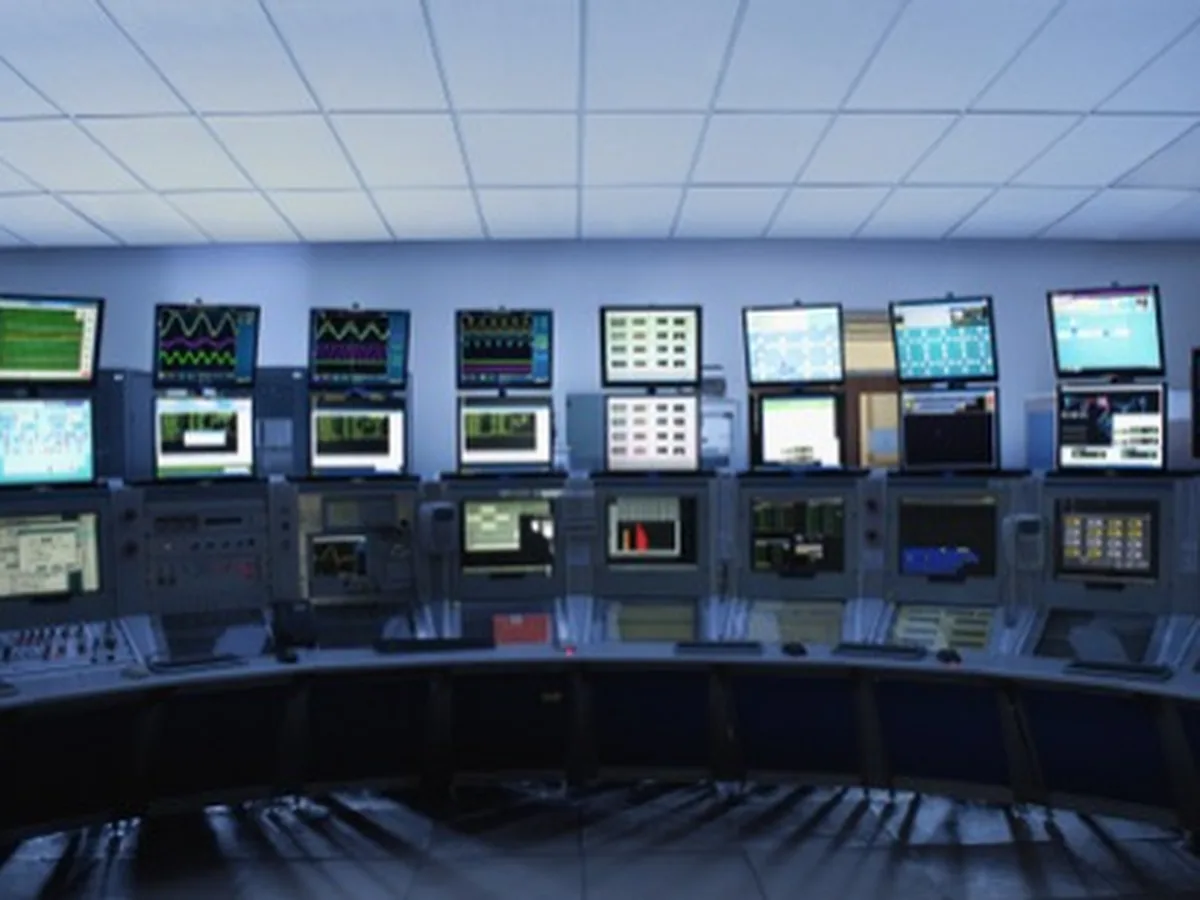
Sensors registered automatically as soon as they were deployed. They began reporting observations without a configuration step at the incident. Analyses, alerts and predictive analytics from emergency response information systems and mobile devices landed on the same record. No agency was asked to replace its command software. The shared view could be read inside the tools each team already ran. The Explorer dashboard was there for anyone who wanted a visual view without writing code. DHS also recorded a multi-domain scenario, with fire, law enforcement and emergency medical teams responding together.
Stock photograph
Route not taken
Single-vendor mandate
One platform, every agency buys in. That is how the stovepipes were built.
Route not taken
Per-agency integrations
One per sensor, written by each agency and rewritten when the sensor changed.
The fit
SensorUp, on an open standard
Any sensor that spoke it was usable by every team and every platform.
What changed
Fire, police and emergency medical command shared one view, in their own tools
01
Connected on deployment
Sensors from different vendors and agencies connected automatically as soon as they were deployed.
02
One view across three domains
Fire, law enforcement and emergency medical command teams shared one view of the incident.
03
Read in each team’s own tools
Each team read that view in its own tools, or in a no-code dashboard.
04
A new agency’s sensors could join without new code
Because the standard was open, a new agency’s sensors could join the same record without a per-sensor integration.
As described by DHS S&T and SensorUp in 2020. No before-and-after figures were measured for this engagement, so none are reported here.
On open-standard sensor integration
“I was impressed with the ‘state of the practical’ where these various industry sensors can be integrated today using open standards that remove the stovepipe limitations of one-off technologies.”
More earlier work: rail visibility at every handoff for Cando Rail and a live view of every firefighter at Vancouver Fire Rescue. How the same pattern runs in industrial operations today: why SensorUp.
Build a working prototype on your data in two days
The workshop is free. Bring one workflow and a representative sample of your data, and an engineer will scope it with you on day one.